

A successful woman is a common phenomenon in today’s society, but this was not always the case. Women once fought for their right to work, education, and voting rights. Today, we will discuss Isabella Ford, one of Britain’s prominent reformers and suffragists. Born in Leeds, Isabella was an activist in our city. Let’s delve into her life and legacy. Next on leedski.com.
Early Life
Isabella Ford was born in Leeds in 1855 into a large family as the youngest of eight children. She received her education at home, where governesses taught her and her sisters. They became fluent in French and German. At the age of 16, Isabella began teaching at a night school for mill girls, funded by her parents. It was here that she first encountered the realities of class inequality.
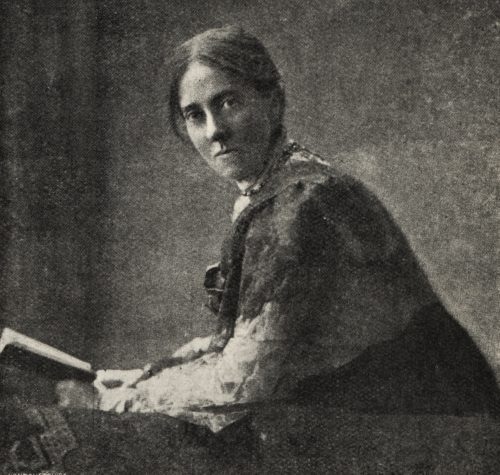
Active Social Engagement
In the 1880s, Isabella started working with trade unions. She collaborated with seamstresses advocating for better working conditions, helped establish a union for them, and participated in their strikes. Her dedication led to her being appointed a lifelong member of the Leeds Trades and Labour Council.
Later, Isabella helped found the Leeds branch of the Independent Labour Party (ILP) and became president of the Leeds Tailors’ Union. She championed socialism, women’s suffrage, and the establishment of unions. Although naturally shy, Isabella overcame her reticence to become a skilled public speaker. She spoke at meetings, wrote pamphlets, and contributed columns to Leeds Forward.
In 1895, she was elected parish councillor for Adel cum Eccup in Leeds. She later concentrated on her work within the ILP and served on its National Administrative Council for four years. In 1903, Isabella became the first woman to address the Labour Representation Committee’s annual conference. Fluent in several languages, she also served as a translator at International Labour gatherings. Despite being encouraged to run for Parliament and for the role of Lady Lord Mayor of Leeds, she declined both opportunities.
Advocacy for Animals and Pacifism
Isabella was also an advocate for animal rights and a vegetarian. In 1896, she signed a petition by the Humanitarian League opposing vivisection.
When World War I began, Isabella became a staunch pacifist. In August 1914, as Britain officially entered the war, she organized a women’s peace rally. Additionally, Leeds became home to branches of the Women’s International League and the Women’s Crusade for Peace.
Personal Life
Isabella never married, or at least no records of a marriage exist. As an adult, she lived with her sisters in Leeds. She was a talented pianist and supported her sister Bessie in organizing free concerts for workers in the city. Isabella Ford passed away in 1924.
Isabella Ford is a significant figure not only in Leeds but also in British history. She fought for workers’ rights, women’s suffrage, and animal welfare. In an era when women were not seen as politicians, speakers, or leaders, Isabella proved otherwise and cemented her place in history.
We hope this article provided valuable insights into an inspiring figure from our city.