

Leeds, known for its rich history and cultural vibrancy, has been home to numerous festivals and events over the years. Among these, the Leeds Triennial Musical Festival holds a special place as a prestigious classical music festival. Established in 1858, this festival brought world-class music and performers to Leeds for over a century. Here’s a closer look at the history and significance of this iconic event. Next on leedski.com.
The Inaugural Festival
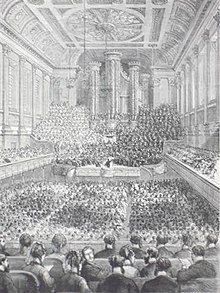
The first Leeds Musical Festival was held in 1858 to mark the grand opening of the Leeds Town Hall by Queen Victoria on September 7, 1858. The new town hall, built as a venue for public performances, could seat an impressive 8,000 attendees.
Although the inaugural festival was a success, it wasn’t immediately followed by annual events. The second festival didn’t take place until 1874, under the direction of Sterndale Bennett, marking the beginning of a tradition that would flourish for decades.
Growth and International Recognition
The festival’s reputation grew significantly under the leadership of Sir Arthur Sullivan, who served as its principal conductor from 1880 to 1898. During this period, the Leeds Festival gained international acclaim for its exceptional choruses and innovative programming. Orchestras were brought in from London to ensure the highest musical standards.
Highlights from these years include the premiere of Sullivan’s oratorio “The Martyr of Antioch” and the 1886 debut of his work “The Golden Legend”, which became one of his most celebrated compositions.
The festival also attracted distinguished international artists. For example, the renowned Russian pianist and composer Sergei Rachmaninoff performed at the 1910 festival, contributing to its global prestige.
Significant Performances and Premieres
Over the years, the festival hosted numerous groundbreaking performances:
- 1910: Charles Villiers Stanford conducted his own choral work “Songs of the Fleet”.
- 1922: Edward Elgar orchestrated Hubert Parry’s “Jerusalem”, which premiered at the festival.
- 1931: The festival saw the debut of William Walton’s biblical cantata “Belshazzar’s Feast”, featuring a 300-voice choir and a large orchestra, conducted by Malcolm Sargent.
- 1937: Sir Thomas Beecham conducted Bach’s “St. Matthew Passion” and Verdi’s “Requiem”, among other masterpieces.
Despite its early success, the festival faced challenges in later years. Financial difficulties in 1953 raised questions about its viability. Although it managed to celebrate its centenary in 1958, the festival’s prominence began to wane. By 1985, the Leeds Triennial Musical Festival held its final event, ending over a century of musical excellence.
However, the Leeds Festival Chorus, originally formed for the festival, became an independent entity in 1976 and continues to perform to this day.
The Leeds Triennial Musical Festival remains a landmark in the city’s cultural history. For over a century, it brought classical music to Leeds, featuring legendary composers, conductors, and performers. Its legacy is preserved through the continued efforts of the Leeds Festival Chorus and the city’s commitment to promoting arts and culture.